what the researchers actually found
CJC-1295 studies leave claims of better health unanswered
The compound was made in a lab to raise growth hormone. You'll find the results in rats and people, claims about adding a second substance, and the missing safety tests.
The rats had higher growth hormone with the attached form
CJC-1295 copies a natural hormone that prompts the growth hormone gland [7]. This page weighs the findings in animals and people against the claims made for you.
Growth hormone starts production in the liver of another hormone that helps cells grow [7]. Four changes slow CJC-1295's breakdown; one form also joins a blood protein [7].
The two thousand five study by Jette's team tested versions joined to that protein in rats [7]. The team chose the longer-lasting version for further research.
Over two hours, the rats' total growth hormone was 4-fold higher, or four times the comparison amount. The comparison was with the version lacking the attachment, not with human treatment.
The compound remained detectable in rat blood at 72 hours. A separate test in lab liquid showed resistance to a protein that normally breaks hormones down.
That lab test measured breakdown, rather than treating living animals or people. What happened in rat blood doesn't establish that your health would improve.
Shots raised blood hormones in healthy adults, without proving health gains
The human studies checked blood levels rather than better health
A microgram weighs one millionth as much as a gram, a very small amount. A kilogram weighs slightly more than two pounds, so the shots depended on body weight.
Two thousand six: Teichman's team gave healthy adults 30 or 60 micrograms per kilogram [1]. The shots went under the skin, and the study followed blood hormone levels.
Growth hormone rose 2- to 10-fold, or between twice and ten times its earlier level. That result measured a blood rise, without proving a health gain.
Growth hormone remained raised for at least six days following the shot. The liver's growth-related hormone also rose, remaining raised nine through eleven days.
After repeated shots, that second hormone stayed high up to 28 days. Half the CJC-1295 left blood within an estimated 5.8 to 8.1 days.
That same year, Ionescu and Frohman studied healthy men aged 20 to 40 [8]. The men received 60 or 90 micrograms per kilogram in a single shot.
A week later, even the low levels between hormone bursts had risen. Growth hormone's average level rose about 46%; the liver's growth-related hormone rose about 45%.
The average includes the high bursts and the lows between bursts. The normal bursts remained equally strong and equally frequent, despite those higher low points.
The two thousand nine study by Sackmann-Sala found blood protein changes in healthy young men [10]. Some proteins carrying fat fell, while some fragments of blood proteins rose.
Some of those changes were greater when the liver's growth-related hormone was higher. That link didn't prove the hormone caused those changes or improved health.
You may hear that these blood results prove the compound makes people feel younger. The CJC-1295 studies were small; they don't establish that promised benefit.
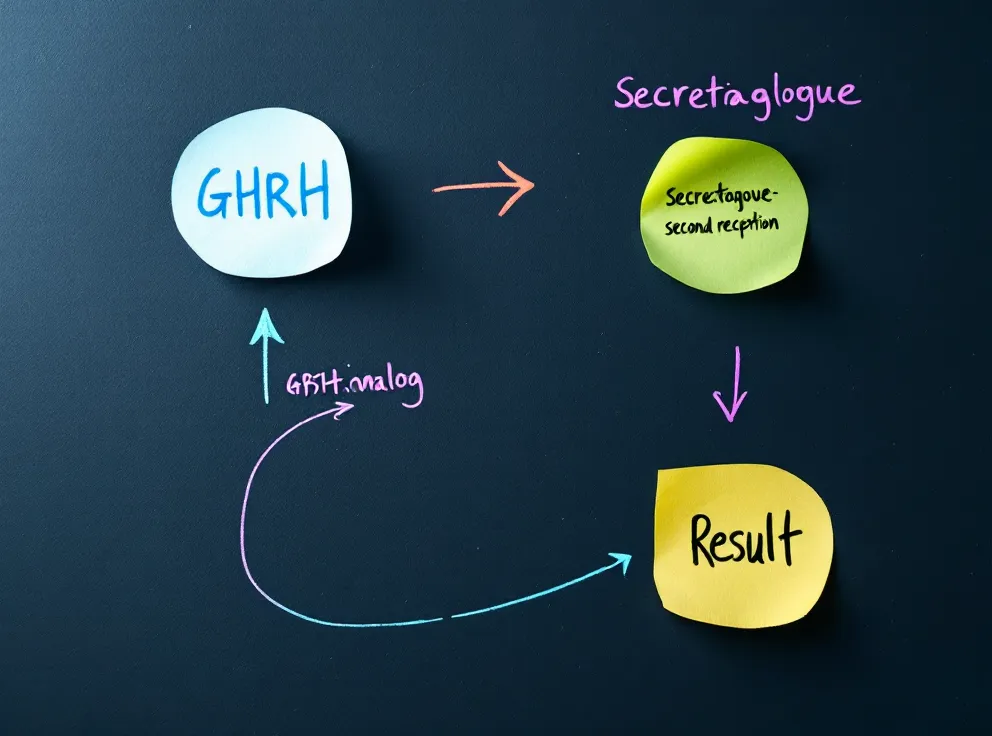
Adding a second compound to CJC-1295 has an unproved benefit
Different ways of raising growth hormone explain the pairing claim
The added compound, ipamorelin, also prompts the growth hormone gland. CJC-1295 works differently, giving researchers grounds for testing the pair.
In two thousand two, work with related compounds found a stronger hormone response from two prompts [15]. Ghrelin, a natural hunger hormone, strengthened the effect of another hormone-releasing compound.
That result explains interest in adding a second compound, rather than proving this pair works. You'd need a study comparing this pair with another treatment or a dummy shot.
A placebo, a dummy shot, helps researchers check what the compounds caused. A seller's promise of better health hasn't been established by such a study of this pair.
CJC-1295 ipamorelin names the proposed pair
CJC-1295 ipamorelin means using the two hormone-raising compounds together. Each prompts the gland differently, so the combined hormone response could be stronger [15].
A stronger response doesn't prove improved sleep, extra strength or better health. Your benefit and your risks still need testing with the actual pair.
The CJC-1295 pair needs testing in healthy adults
Studies of related compounds support the idea of a stronger combined hormone response [15]. They haven't established health gains from this specific pair in healthy adults.
A brochure may make CJC-1295 sound like half of a settled treatment. The work explains interest in that pair, without settling whether health improves.
Approval for related medicines does not cover CJC-1295
CJC-1295 cannot borrow another medicine's approval
CJC-1295 belongs to a group of compounds that prompt growth hormone release. The added attachment was designed to keep one form in blood for days.
A 2024/2025 review covers sermorelin and tesamorelin, related drugs that also prompt growth hormone release [12]. Being included in a review doesn't establish a health benefit for you.
Tesamorelin has FDA approval for excess deep belly fat linked to HIV. That approval covers a particular drug and condition, rather than this whole group.
CJC-1295 has no treatment approval, despite the similar way these compounds act. The sports ban also covers athletes subject to the cited drug-testing rules.

CJC-1295 raises concerns about swelling, blood sugar and lasting harm
CJC-1295 lacks tests of safety over years
Growth hormone kept high can cause swelling and make blood sugar harder to control. Those effects concern your health, even when a brochure treats swelling as a nuisance.
Higher growth-related hormones were linked with some cancer risks in large-group studies. A link raises concern without establishing that this compound causes cancer.
In 2024, FDA advisers raised concerns about reactions from the immune system [11]. The immune system, your body's defence against illness, might react badly to CJC-1295.
ConjuChem stopped its Phase 2 trial, the second stage of testing treatment effects in people. Reports mention a death in connection with that trial, without proving the compound caused the death.
CJC-1295 concerns include extra water and weaker blood sugar control
With growth hormone kept high, kidneys may hold extra water and salt, causing swelling. The body may also respond less well to insulin, the hormone that controls blood sugar.
FDA advisers flagged possible immune reactions in 2024, among other unresolved risks [11]. Your risk over years can't be worked out from short studies.
The blood tests did not measure a lasting treatment benefit
Small adult studies found higher growth-related hormones while normal growth hormone bursts continued [1][8]. Those tests didn't establish whether the volunteers gained lasting improvements in health.
A measured CJC-1295 blood rise doesn't tell you how much better you might feel. Large trials of benefits and safety over time in healthy adults remain missing.